
City of Seattle: Communications Internship
Bringing municipal stories to life
Duration: Sep 2025 - Mar 2026
Role: Communications Intern
Organization: Seattle Public Utilities
City of Seattle
Internal Communications Internship
Bringing municipal stories to life
Duration: Sep 2025 - Mar 2026
Role: Internal Communications Intern
Organization: Seattle Public Utilities
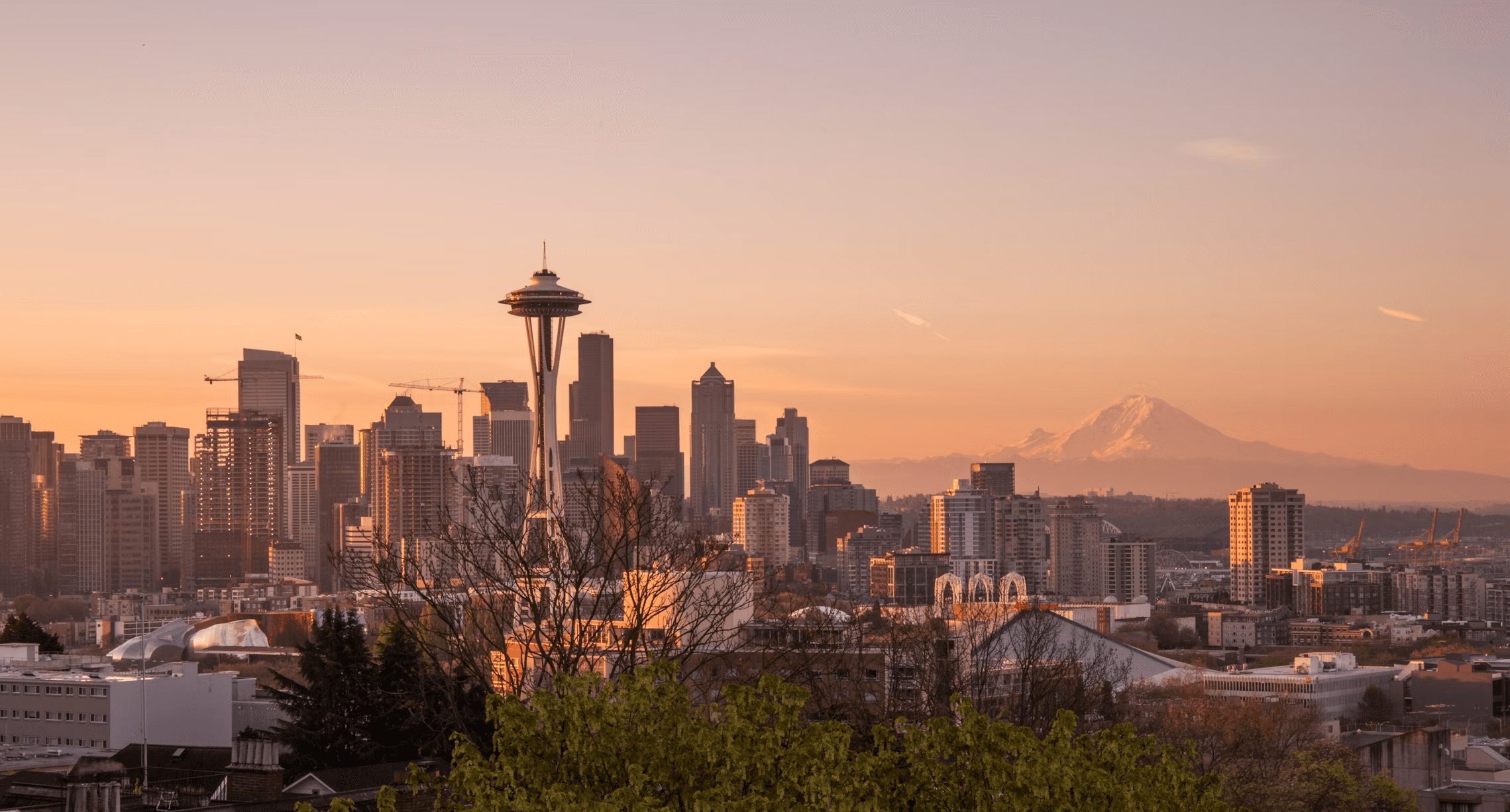
Seattle Public Utilities (SPU) manages the city's water, drainage, and solid waste systems, serving 1.6 million customers across the region. As the utility's internal communications intern, I work to spotlight the people and programs that keep Seattle running.
Seattle Public Utilities (SPU) manages the city's water, drainage, and solid waste systems, serving 1.6 million customers across the region. As the utility's internal communications intern, I work to spotlight the people and programs that keep Seattle running.
My days move between interview prep, field shoots, writing, and editing. I interview SPU employees across departments — from watershed inspectors to community program managers — capturing their stories through video and written features. These pieces live on SPUweb, the department's internal SharePoint platform, reaching 1,500+ employees.
Every Thursday, I help produce UtiliTalk, SPU's weekly newsletter. I write short news items, coordinate content, and design layouts in Mailchimp. Beyond the newsletter, I edit interview footage and event highlights for Instagram, YouTube, and LinkedIn, translating technical municipal work into accessible visual stories.
My days move between interview prep, field shoots, writing, and editing. I interview SPU employees across departments — from watershed inspectors to community program managers — capturing their stories through video and written features. These pieces live on SPUweb, the department's internal SharePoint platform, reaching 1,500+ employees.
Every Thursday, I help produce UtiliTalk, SPU's weekly newsletter. I write short news items, coordinate content, and design layouts in Mailchimp. Beyond the newsletter, I edit interview footage and event highlights for Instagram, YouTube, and LinkedIn, translating technical municipal work into accessible visual stories.
The Work
The Work
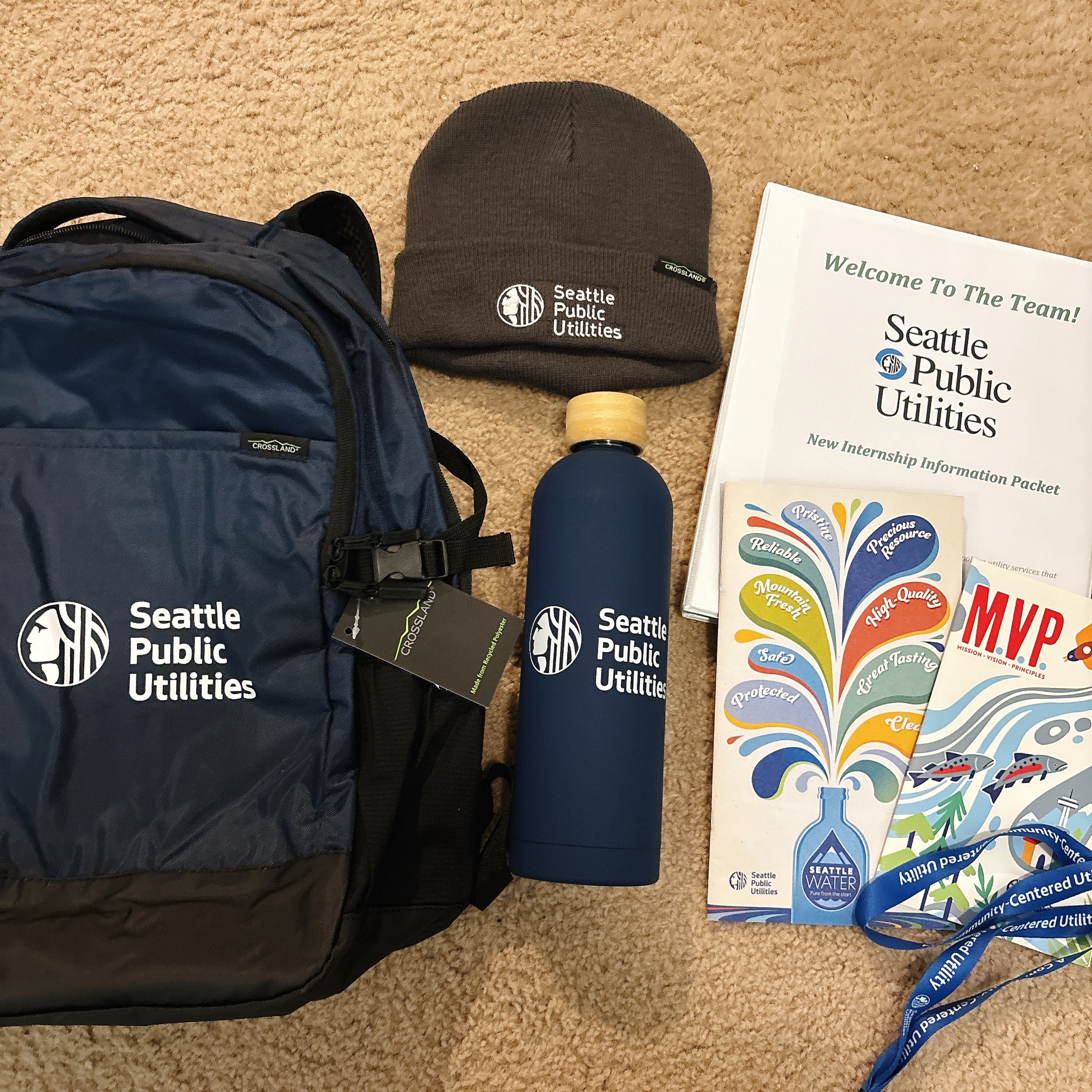
As a non-native English speaker navigating government communications, the learning curve felt steep at first. But I'm also getting a fascinating inside look at how government agencies operate. Through this experience, I hope to master translating complex municipal work into engaging stories that resonate both internally and publicly.
As a non-native English speaker navigating government communications, the learning curve felt steep at first. But I'm also getting a fascinating inside look at how government agencies operate. Through this experience, I hope to master translating complex municipal work into engaging stories that resonate both internally and publicly.
The Challenge
The Challenge
Performance & Optimization
Every newsletter is a learning opportunity.
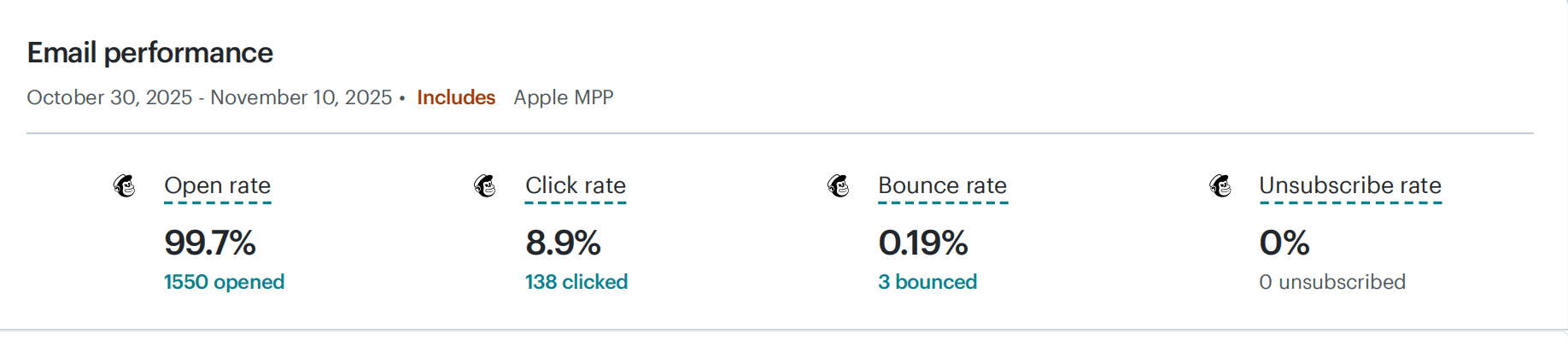
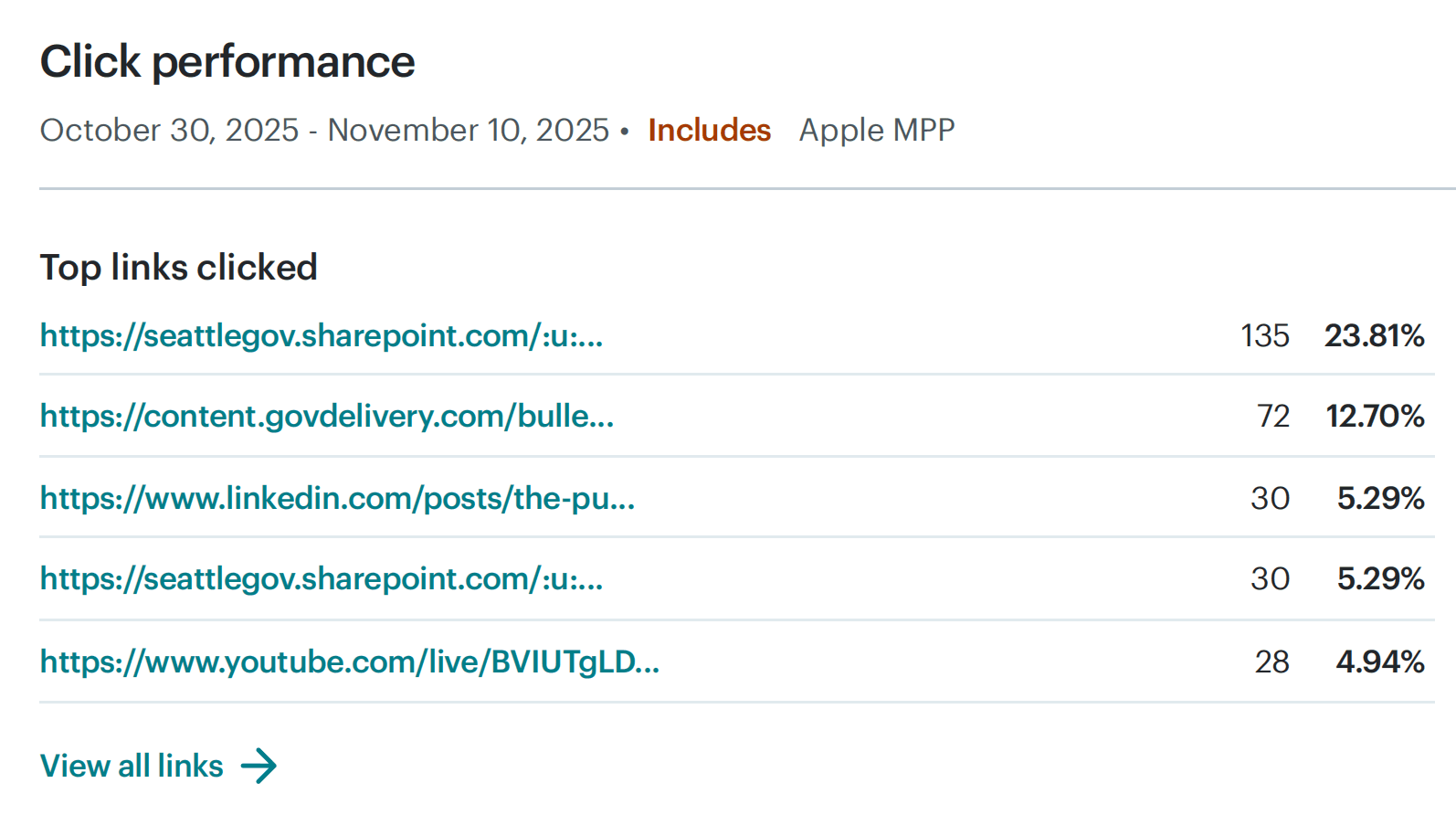
I collaborate closely with my Corporate Communications Advisor to analyze campaign data — tracking which links drive engagement, which story formats resonate most, and how audience segments interact with different content types. Through this ongoing analysis, we've identified that employee spotlights and concrete action items consistently outperform general updates. This data-driven approach informs our content strategy, helping us continuously refine how we communicate SPU's mission and culture to strengthen internal connection across all departments.
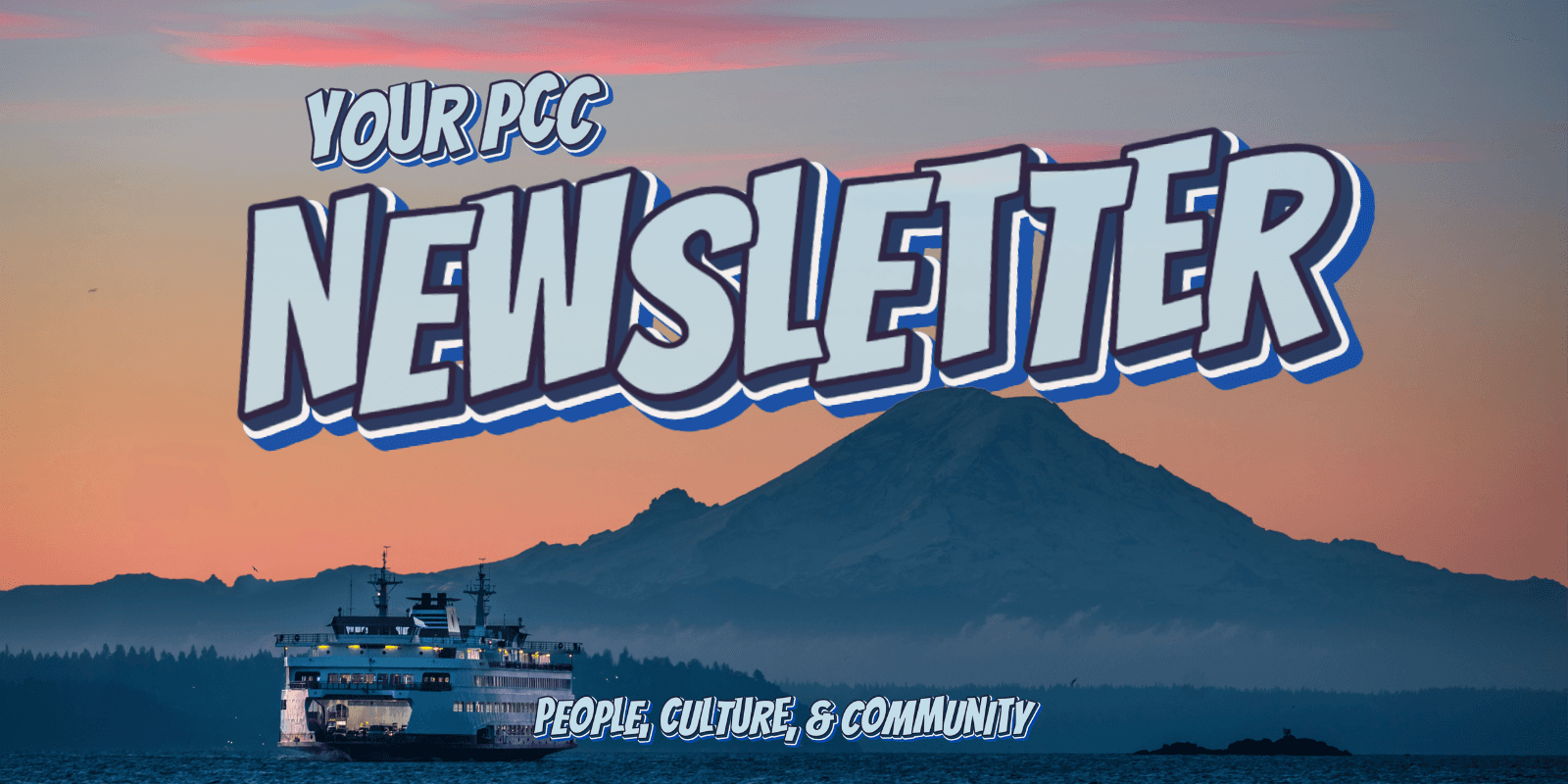
Every Thursday, I shape SPU's internal voice through UtiliTalk, our weekly newsletter reaching 1,500+ employees. Beyond the core newsletter, I also produce the PCC (People, Community, and Culture Branch) newsletter monthly.
My role spans the full production cycle — from content strategy and copywriting to layout design in Mailchimp and data analysis. These pieces reflect my ability to distill complex municipal operations into engaging, accessible stories that build internal connection and drive engagement.
Newsletter Strategy & Execution
View Newsletter Sample
View Newsletter Sample

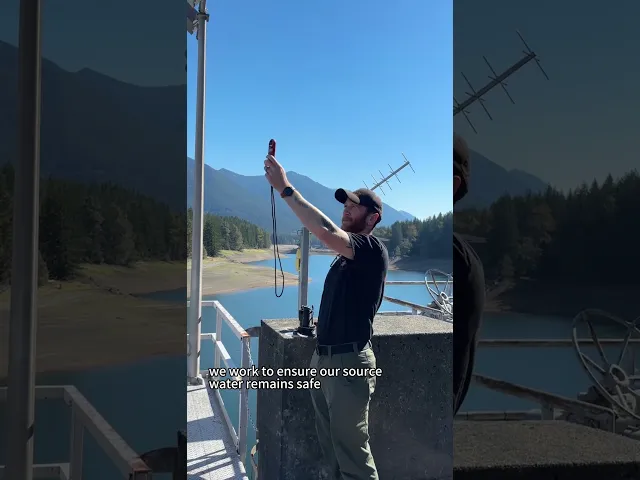
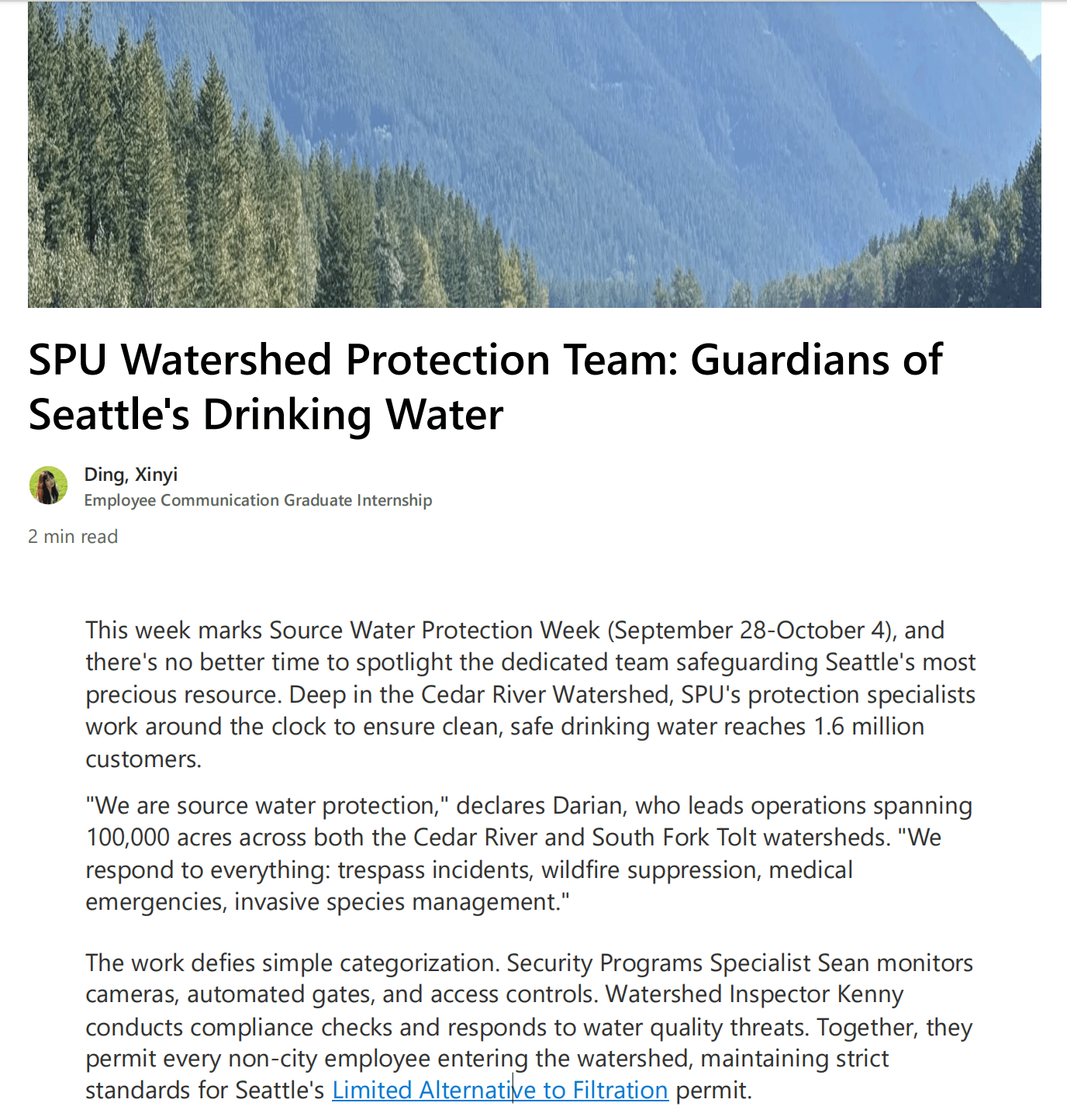
For the fifth annual Source Water Protection Week (Sept 28-Oct 4), I produced a multimedia feature on SPU's Watershed Protection Team. The project took me deep into the Cedar River Municipal Watershed — 100,000 acres where Seattle's drinking water begins.
I spent days with Darian, Sean, and Kenny, the team members who patrol this vast landscape responding to everything from wildfire threats to invasive species. After pre-interview research on the watershed system and filtration regulations, I designed questions that would reveal the dynamic, often unexpected nature of their work.
The resulting article highlighted each team member's unique role, while the short video clips I edited showed them in action — measuring wind speed, monitoring water depth, inspecting gates, and managing public recreation areas. Both pieces ran across internal platforms and social media, celebrating the people who protect Seattle's water at its source.
Feature Projects
Source Water Protection Week
(SPU's Watershed Protection Team)
Read Full Article
Watch Video
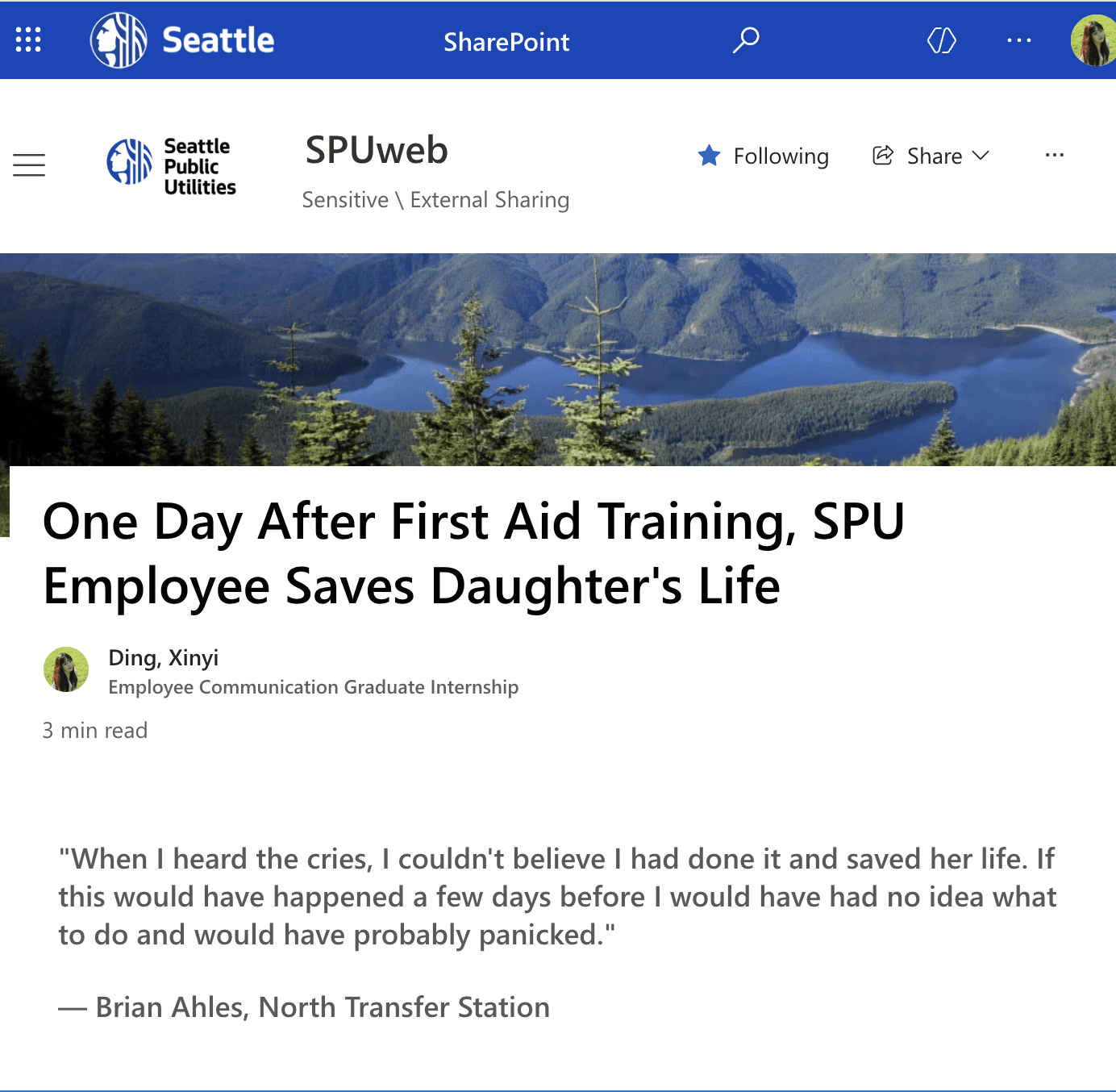
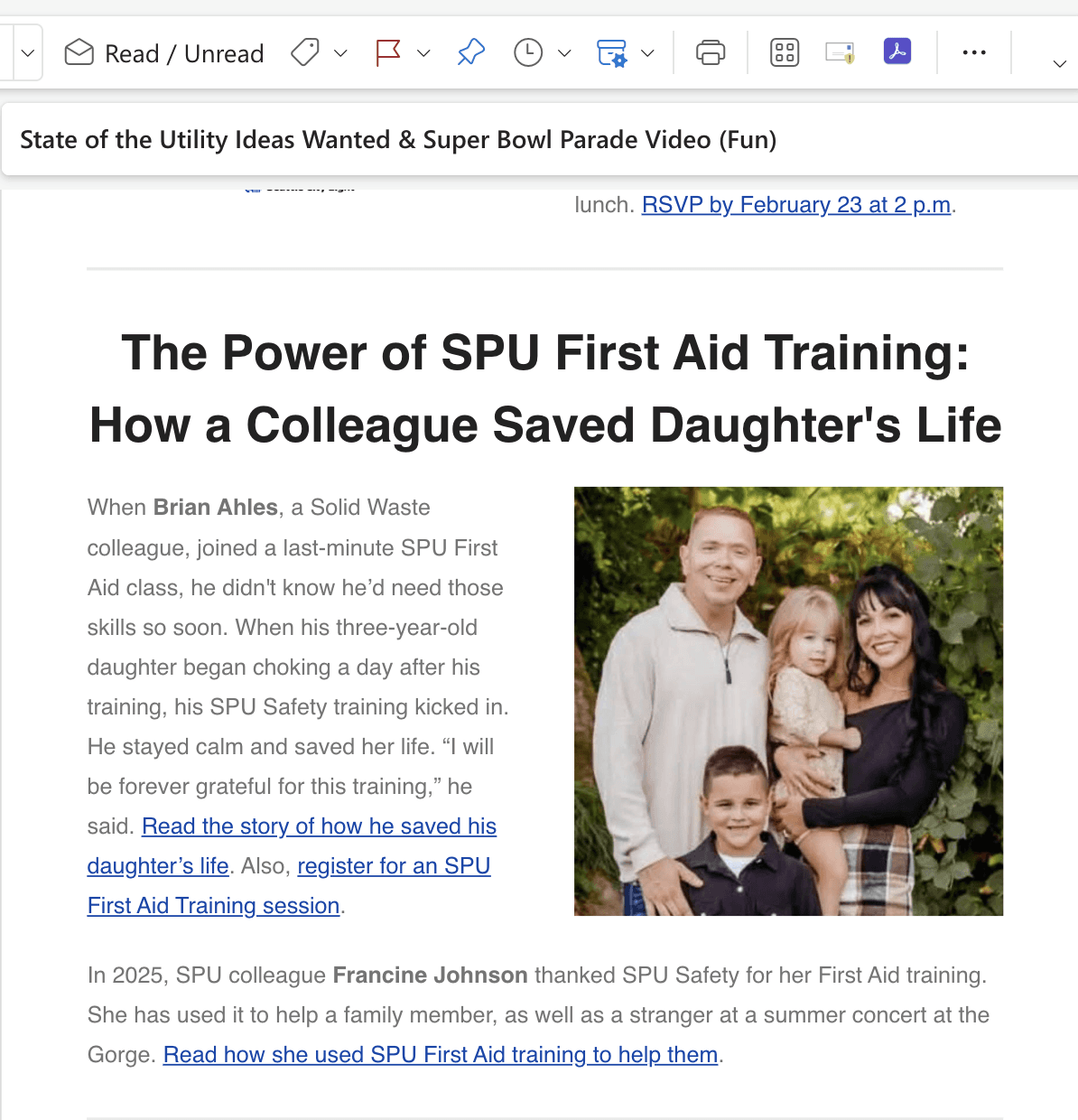
In January 2026, SPU Safety team forwarded an email from Brian Ahles, a North Transfer Station employee, describing how he had used a back-blow technique — learned just one day earlier in SPU's First Aid Training — to save his three-year-old daughter from choking. Our communications team recognized it immediately as a story worth telling, and I was assigned to lead the reporting and writing.
I identified the key sources, designed interview questions, and coordinated outreach across departments to bring the story together. I interviewed Brian by phone, drawing out the specific details that made the incident vivid: what his daughter was eating, the three minutes he had stepped away, the six rounds of back blows before the obstruction finally cleared. I also gathered program context from the SPU Safety team and secured a quote on the training's broader significance.
The resulting feature ran on SPUweb and UtiliTalk newsletter, reaching 1,500+ employees. It highlighted not just a remarkable personal moment but the real-world stakes of workplace safety training — and was timed to promote upcoming First Aid sessions.
Feature Projects:
One Day After First Aid Training, SPU Employee Saves Daughter's Life
Read Full Article
View Newsletter
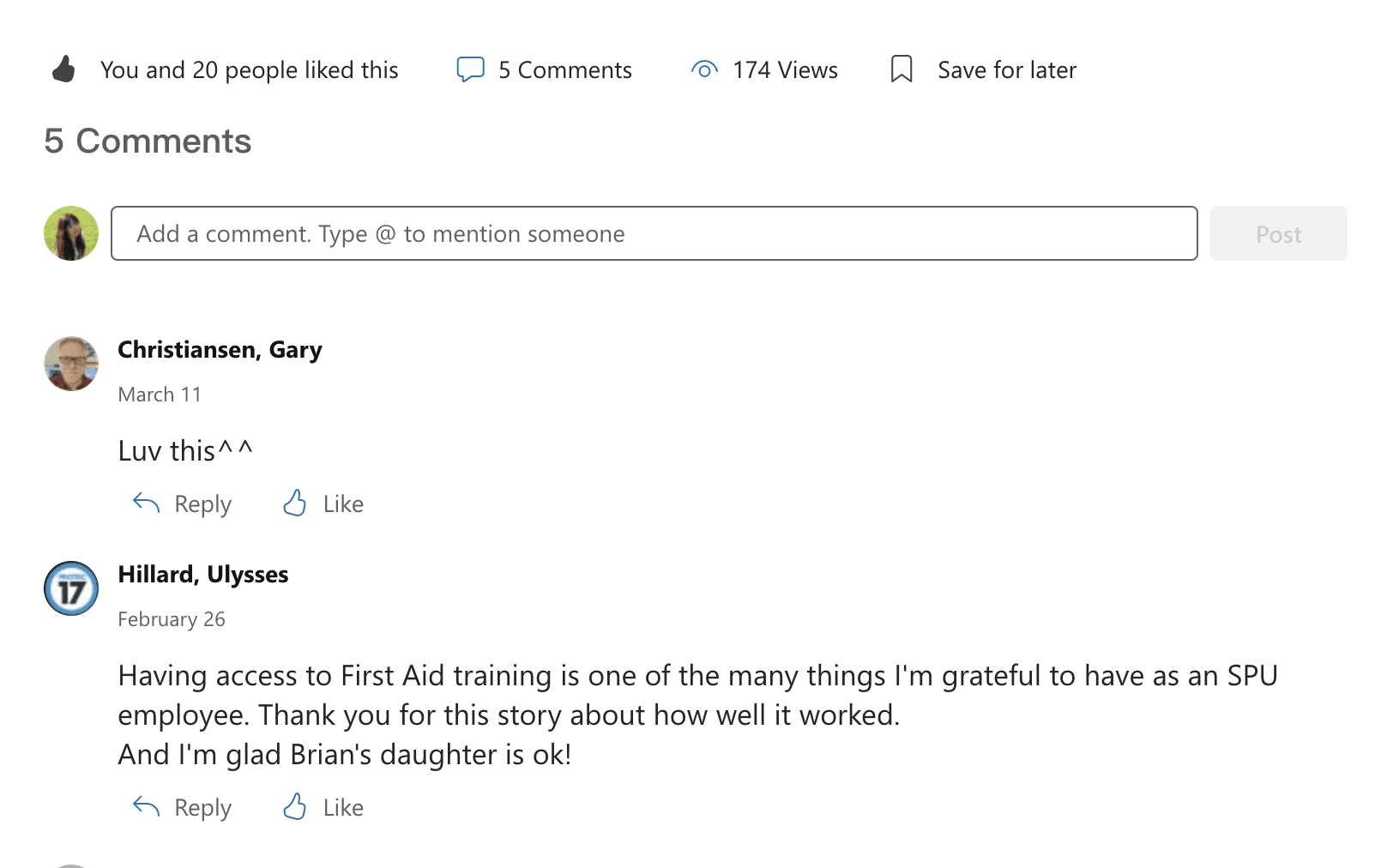
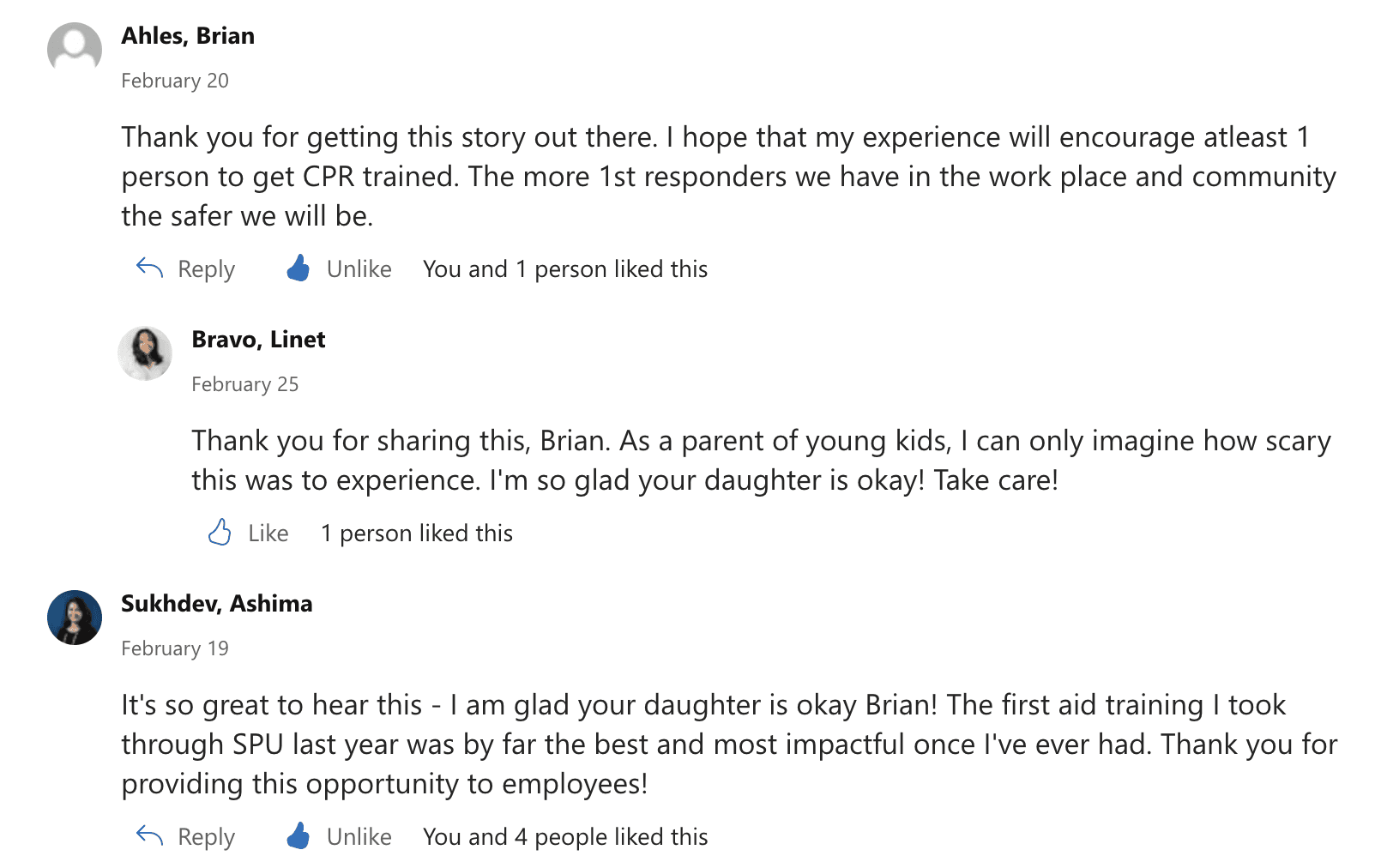
Employee's comments:
In Oct 2025, I led SPU's participation in Imagine A Day Without Water — a national campaign sponsored by the US Water Alliance that challenges communities to visualize life without their most essential resource.
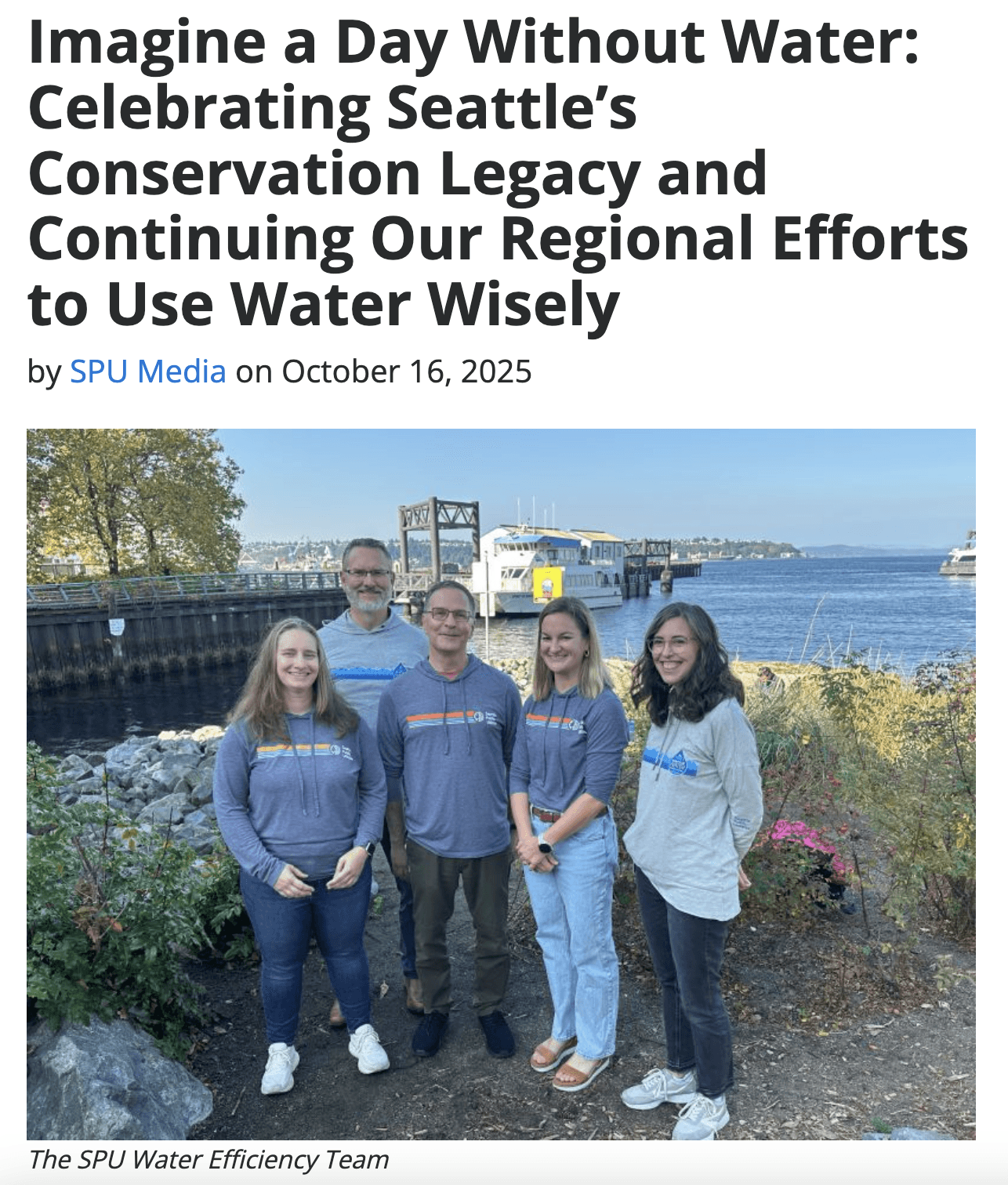
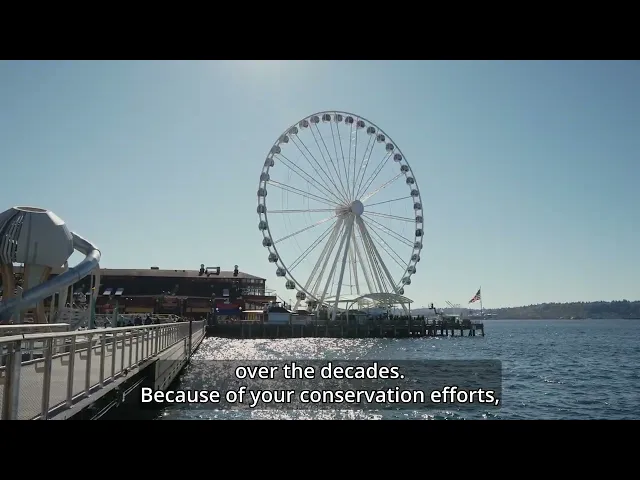
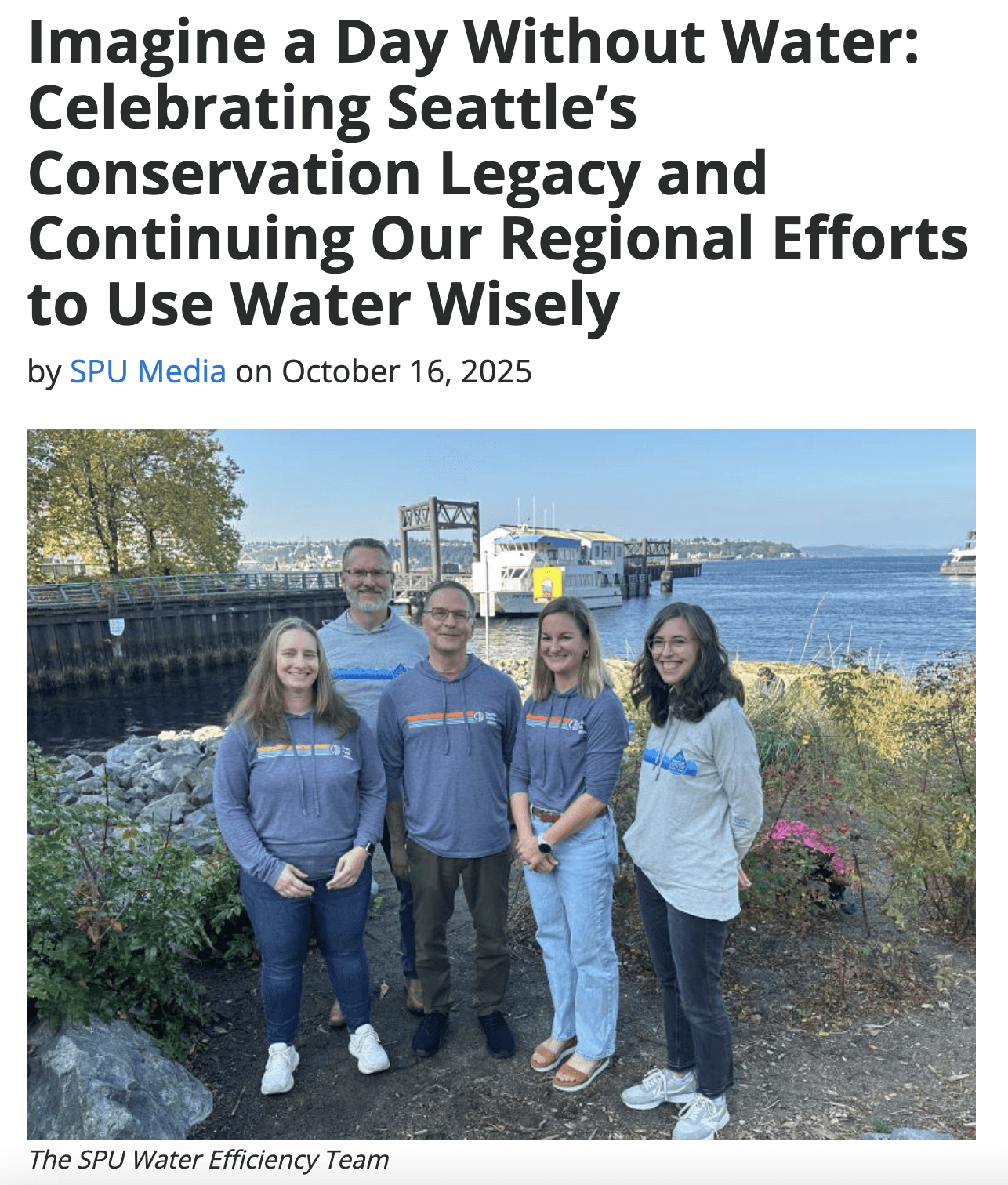
After researching the national campaign and SPU's conservation achievements, I worked with Travis to film the SPU's Water Efficiency Team at waterfront. I captured both interviews and B-roll footage showing water's connection to daily life. The 90-second video I edited ran across YouTube, Instagram, and LinkedIn.
I also wrote two companion pieces: a comprehensive feature for the At Your Service blog and a condensed version for UtiliTalk. Both connected the national campaign to local context, highlighting Seattle's conservation legacy (the region uses the same amount of water as in the 1950s despite population growth) and providing seasonal water-saving tips to protect salmon during their critical fall migration.
The project taught me to adapt national campaigns for local audiences, and translate environmental data into stories that show people their role in the system they depend on.
Imagine A Day Without Water Campaign
(SPU's Water Efficiency Team)
Read Full Article
Watch Video
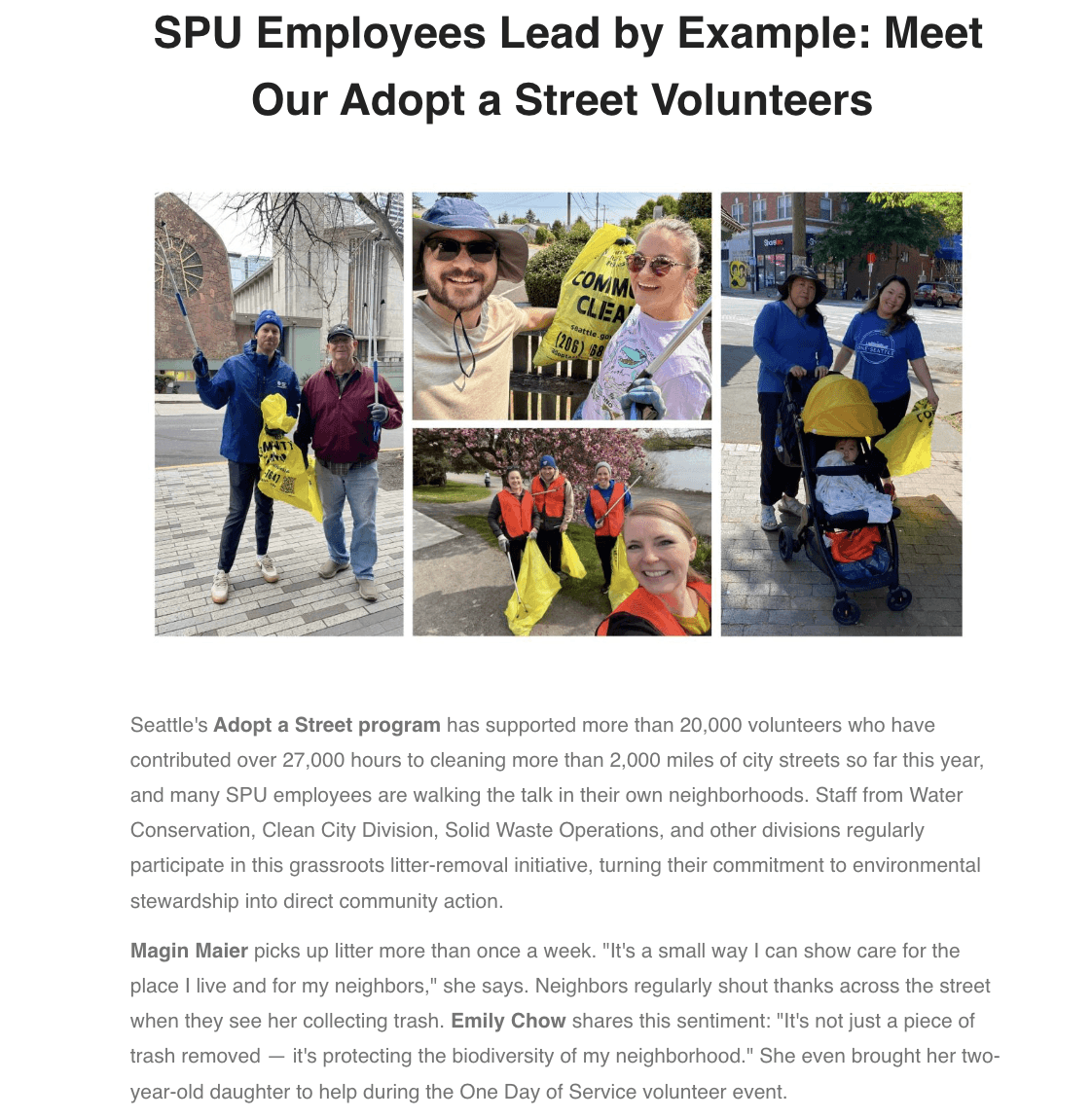
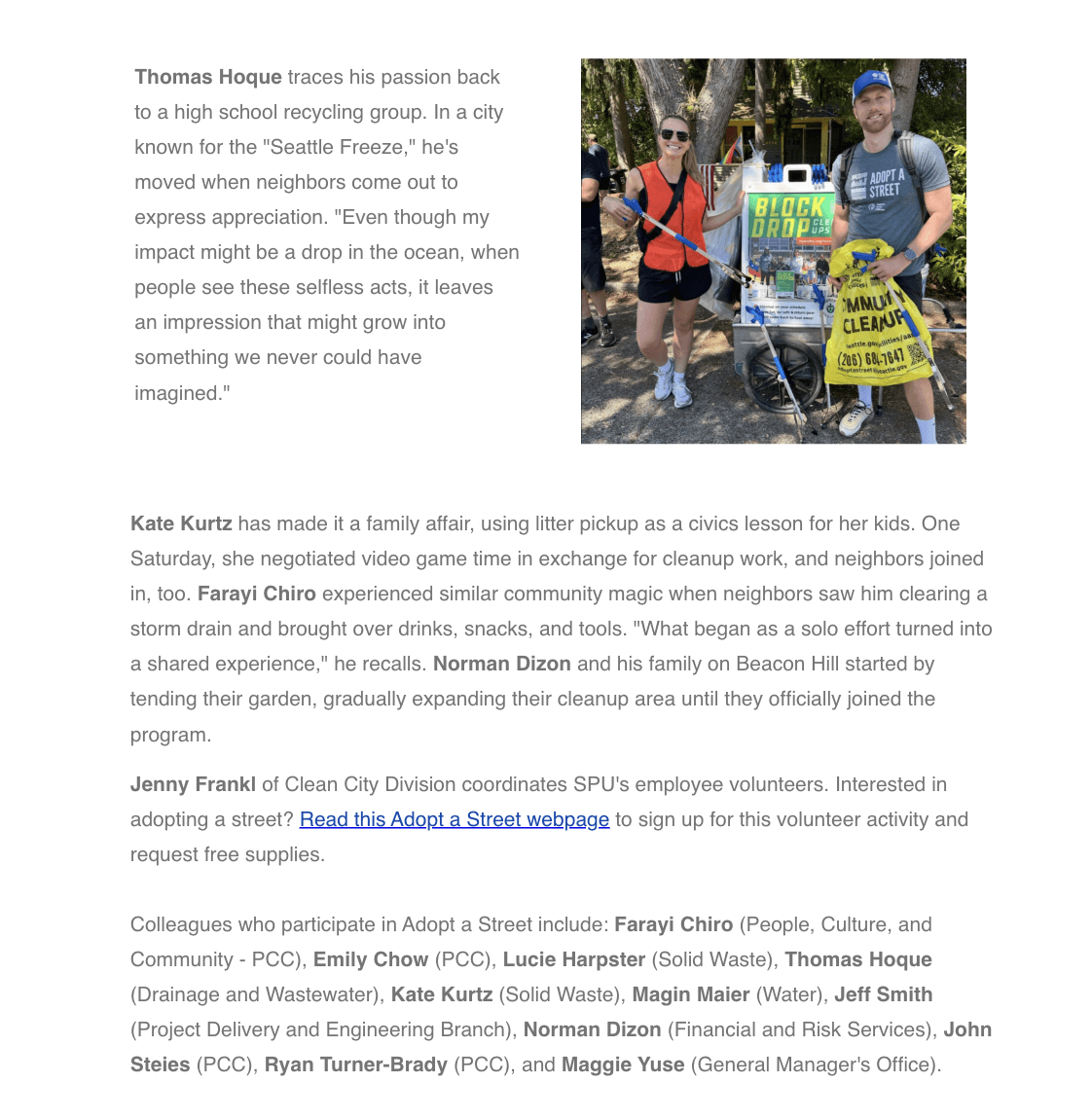
In Oct 2025, I profiled SPU employees who volunteer with Seattle's Adopt a Street program — a grassroots initiative where residents clean their own neighborhoods. My assignment started with a single interview with Jenny Frankl, Clean City Division's volunteer coordinator. But to capture the full picture of why SPU staff participated, I designed a brief survey asking about their motivations, memorable moments, and involvement frequency.
Eleven employees across five divisions responded. Instead of relying on one voice, I crafted a narrative that wove together six representative stories — from the weekly habit-former to the neighbor-turned-friend to the family making civics lessons out of litter pickup. But I didn't stop there. I listed every single participant by name and division, ensuring that all volunteers felt equally celebrated.
The resulting newsletter piece ran in UtiliTalk, reaching 1,500+ employees. It wasn't just highlighting a program. It was validating SPU staff who embodied the organization's environmental mission in their personal lives, building internal culture around the idea that grassroots action starts with us.
Adopt a Street Campaign
In November 2025, I led a social media campaign promoting the Washington State Recycling Reform Act—legislation that shifts recycling costs from residents to producers and will expand curbside recycling to 500,000 additional homes by 2030. The challenge was making future-oriented policy feel urgent and relatable when actual impacts wouldn't arrive for years.
Working with Amanda, SPU's Social Media Lead, I developed a creative strategy inspired by TikTok's SubwayTakes format. Research shows that stories with emotional elements drive 2.5 times more engagement than purely informational content. I proposed this concept: SPU employee Maggie interviews State Representative Liz Berry on Seattle's light rail, discussing the everyday frustration of "Who should pay for recycling—companies or residents?" They exit together to recycle drink cans, embodying the behavior the law encourages.
The video became our strongest-performing content. Instagram generated 328 likes, TikTok reached 482 likes, and LinkedIn earned 122 likes. Comments reflected genuine curiosity, with people asking follow-up questions about the policy.
This project proved that government communication can be both creative and credible. By choosing engagement over formality and dialogue over monologue, we demonstrated that policy storytelling doesn't have to feel distant—it just needs to meet audiences where they already are.
Washington State Recycling Reform Act Campaign
See Full Post
In Sep 2025, I documented the Trees for Neighborhoods program, which distributes 1,000 free trees annually to Seattle residents. At the University of Washington Botanic Gardens, I filmed Program Manager Bria Blitch as she explained the species selection process and the program's weighted lottery system — designed to prioritize neighborhoods with less tree canopy and higher heat exposure.
The Instagram videos I produced walked viewers through the application process and showcased the diverse tree species available. The content performed well, connecting SPU's environmental mission with tangible community impact.
I'll continue following this story through the delivery phase, documenting how these trees find their way to homes, schools, and businesses across the city.
Trees for Neighborhoods Campaign
See Full Post
Newsletter Strategy & Execution
Every Thursday, I shape SPU's internal voice through UtiliTalk, our weekly newsletter reaching 1,500+ employees. Beyond the core newsletter, I also produce the PCC (People, Community, and Culture Branch) newsletter monthly.
My role spans the full production cycle — from content strategy and copywriting to layout design in Mailchimp and data analysis. These pieces reflect my ability to distill complex municipal operations into engaging, accessible stories that build internal connection and drive engagement.

Performance & Optimization
Every newsletter is a learning opportunity.
I collaborate closely with my Corporate Communications Advisor to analyze campaign data — tracking which links drive engagement, which story formats resonate most, and how audience segments interact with different content types. Through this ongoing analysis, we've identified that employee spotlights and concrete action items consistently outperform general updates. This data-driven approach informs our content strategy, helping us continuously refine how we communicate SPU's mission and culture to strengthen internal connection across all departments.
Feature Projects:
Source Water Protection Week (SPU's Watershed Protection Team)
For the fifth annual Source Water Protection Week (Sept 28-Oct 4), I produced a multimedia feature on SPU's Watershed Protection Team. The project took me deep into the Cedar River Municipal Watershed — 100,000 acres where Seattle's drinking water begins.
I spent one day with Darian, Sean, and Kenny, the team members who patrol this vast landscape responding to everything from wildfire threats to invasive species. After pre-interview research on the watershed system and filtration regulations, I designed questions that would reveal the dynamic, often unexpected nature of their work.
The resulting article highlighted each team member's unique role, while the short video clips I edited showed them in action — measuring wind speed, monitoring water depth, inspecting gates, and managing public recreation areas. Both pieces ran across internal platforms and social media, celebrating the people who protect Seattle's water at its source.
Feature Projects:
One Day After First Aid Training, SPU Employee Saves Daughter's Life
In January 2026, SPU Safety team forwarded an email from Brian Ahles, a North Transfer Station employee, describing how he had used a back-blow technique — learned just one day earlier in SPU's First Aid Training — to save his three-year-old daughter from choking. Our communications team recognized it immediately as a story worth telling, and I was assigned to lead the reporting and writing.
I identified the key sources, designed interview questions, and coordinated outreach across departments to bring the story together. I interviewed Brian by phone, drawing out the specific details that made the incident vivid: what his daughter was eating, the three minutes he had stepped away, the six rounds of back blows before the obstruction finally cleared. I also gathered program context from the SPU Safety team and secured a quote on the training's broader significance.
The resulting feature ran on SPUweb and UtiliTalk newsletter, reaching 1,500+ employees. It highlighted not just a remarkable personal moment but the real-world stakes of workplace safety training — and was timed to promote upcoming First Aid sessions.
Employee's comments:
Feature Projects: Washington State Recycling Reform Act Campaign
In November 2025, I led a social media campaign promoting the Washington State Recycling Reform Act—legislation that shifts recycling costs from residents to producers and will expand curbside recycling to 500,000 additional homes by 2030. The challenge was making future-oriented policy feel urgent and relatable when actual impacts wouldn't arrive for years.
Working with Amanda, SPU's Social Media Lead, I developed a creative strategy inspired by TikTok's SubwayTakes format. Research shows that stories with emotional elements drive 2.5 times more engagement than purely informational content. I proposed this concept: SPU employee Maggie interviews State Representative Liz Berry on Seattle's light rail, discussing the everyday frustration of "Who should pay for recycling—companies or residents?" They exit together to recycle drink cans, embodying the behavior the law encourages.
The video became our strongest-performing content. Instagram generated 328 likes, TikTok reached 482 likes, and LinkedIn earned 122 likes. Comments reflected genuine curiosity, with people asking follow-up questions about the policy.
This project proved that government communication can be both creative and credible. By choosing engagement over formality and dialogue over monologue, we demonstrated that policy storytelling doesn't have to feel distant—it just needs to meet audiences where they already are.
Feature Projects: Adopt a Street Campaign
In Oct 2025, I profiled SPU employees who volunteer with Seattle's Adopt a Street program — a grassroots initiative where residents clean their own neighborhoods. My assignment started with a single interview with Jenny Frankl, Clean City Division's volunteer coordinator. But to capture the full picture of why SPU staff participated, I designed a brief survey asking about their motivations, memorable moments, and involvement frequency.
Eleven employees across five divisions responded. Instead of relying on one voice, I crafted a narrative that wove together six representative stories — from the weekly habit-former to the neighbor-turned-friend to the family making civics lessons out of litter pickup. But I didn't stop there. I listed every single participant by name and division, ensuring that all volunteers felt equally celebrated.
The resulting newsletter piece ran in UtiliTalk, reaching 1,500+ employees. It wasn't just highlighting a program. It was validating SPU staff who embodied the organization's environmental mission in their personal lives, building internal culture around the idea that grassroots action starts with us.
Feature Projects: Trees for Neighborhoods Campaign
In Sep 2025, I documented the Trees for Neighborhoods program, which distributes 1,000 free trees annually to Seattle residents. At the University of Washington Botanic Gardens, I filmed Program Manager Bria Blitch as she explained the species selection process and the program's weighted lottery system — designed to prioritize neighborhoods with less tree canopy and higher heat exposure.
The Instagram videos I produced walked viewers through the application process and showcased the diverse tree species available. The content performed well, connecting SPU's environmental mission with tangible community impact.
I'll continue following this story through the delivery phase, documenting how these trees find their way to homes, schools, and businesses across the city.
Feature Projects:
Imagine A Day Without Water Campaign (SPU's Water Efficiency Team)
In Oct 2025, I led SPU's participation in Imagine A Day Without Water — a national campaign sponsored by the US Water Alliance that challenges communities to visualize life without their most essential resource.
After researching the national campaign and SPU's conservation achievements, I worked with Travis to film the SPU's Water Efficiency Team at waterfront. I captured both interviews and B-roll footage showing water's connection to daily life. The 90-second video I edited ran across YouTube, Instagram, and LinkedIn.
I also wrote two companion pieces: a comprehensive feature for the At Your Service blog and a condensed version for UtiliTalk. Both connected the national campaign to local context, highlighting Seattle's conservation legacy (the region uses the same amount of water as in the 1950s despite population growth) and providing seasonal water-saving tips to protect salmon during their critical fall migration.
The project taught me to adapt national campaigns for local audiences, and translate environmental data into stories that show people their role in the system they depend on.
What I'm Learning
What I'm Learning
Finding the Pulse
Finding the Pulse
This internship is teaching me to work fast and think visually. Government work doesn't have to feel distant or bureaucratic — it just needs the right storytelling. Every week, I'm practicing how to find the human moment in policy work, how to make technical subjects approachable, and how to build narratives that make people care about the infrastructure they depend on.
This internship is teaching me to work fast and think visually. Government work doesn't have to feel distant or bureaucratic — it just needs the right storytelling. Every week, I'm practicing how to find the human moment in policy work, how to make technical subjects approachable, and how to build narratives that make people care about the infrastructure they depend on.